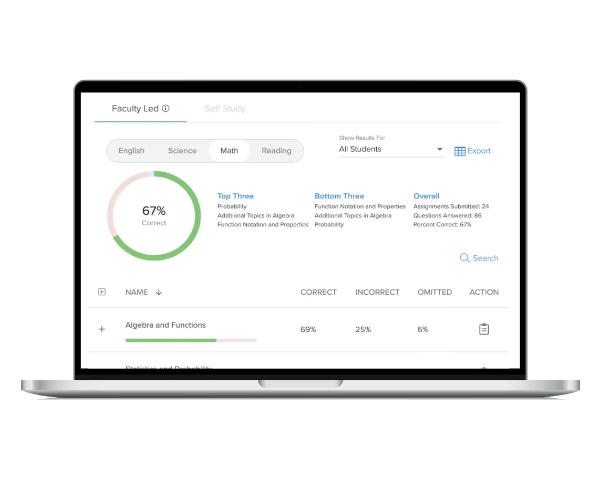
There are 2 truths about the SAT® exam: The new digital format is here to stay, and both students and teachers would benefit from strategic preparation. Philip Bates, UWorld's director of college readiness, knows this well. In his webinar, Fast Facts in 15 Minutes, he discusses what it takes to build proficiency in teaching the digital SAT during the episode Professional Development for Educators: Building Expertise in Digital SAT Instruction.
Learn key takeaways from the webinar as well as resources to help improve SAT scores across campuses and districts.
Why Professional Development Matters for the Digital SAT®
Gone are the days of filling in Scantron bubbles on the SAT. An adaptive, technology-driven format has replaced the paper-and-pencil exam, and with that switch comes a need for a new instructional approach. Specialized training for the digital SAT is crucial for learning how to effectively support students on their college-readiness journey.
Understanding the New Format and Required Skills
Digital SAT expertise calls for a thorough understanding of the new sections, modules, and scoring. It also requires a particular skill set, which educators already possess and simply need to sharpen.
Understanding the Transition to the Digital SAT
The learning curve for transitioning from the traditional SAT to the digital SAT is smoother with a strong understanding of the new format. Educators will benefit from keeping the following changes top of mind.
- 2-section format: Math and Reading & Writing are divided into 2 equal-length modules.
- Shorter duration: The digital SAT lasts 2 hours and 14 minutes.
- Adaptive testing: The 2nd module's difficulty is based on the 1st module's results.
- Reports: Electronic score reports assess reading, writing, and math skills.
- Calculators: Graphing calculators are permitted throughout the Math section.
As the saying goes, knowing is half the battle. The other half is honing the right skills to teach the digital SAT effectively.
Essential Skills Educators Need to Teach the Digital SAT
Fortunately, there is considerable overlap between existing and developing skills in digital SAT instruction. Competencies include the following:
| Content Proficiency | Digital Literacy | Test-Taking Pedagogy | Data Use & Communication |
|---|---|---|---|
|
|
|
|
4 Steps to Create a Campus or District Plan
Schools or districts without a plan for improving digital SAT scores deserve clear guidance. This 4-step process enables leadership to assess historical data, set achievable goals, prioritize simplicity, and incorporate the appropriate tools.
#1: Examine the Historical Data
What's been working well, and what could be improved? Let the numbers tell the story so that teachers can understand where the campus or district has been, its current state, and any future projections.
#2: Set Reasonable Benchmarks and Goals
These goals don't have to focus solely on student achievement. They can also include instructional benchmarks such as the frequency of digital SAT instruction (e.g., students will receive 30 minutes of instruction weekly; teachers will spend 2 hours per month focusing on core subjects).
#3: Keep the Plan Simple
Educators' schedules leave little room for more responsibilities. In addition to teaching their regular courses, teachers are now being asked to deliver digital SAT instruction. A clear, campus- or district-level plan they can easily follow, without significantly cutting into class time, can make all the difference.
#4: Find the Right Tools
If knowledge is power, then the right tools are an amplifier. Educators are best supported when given the resources they need for success, such as those that offer purposeful practice, data-driven insights, and ongoing support.


3 Steps to Building Digital SAT Expertise
Once a clear plan is in place at both the campus and district levels, school leadership can prioritize digital SAT proficiency. This process involves identifying or developing experts, integrating the right training model, and keeping the district plan top of mind.
#1: Find or Develop Your Digital SAT Expert(s)
Not everyone on campus needs to be an expert on the digital SAT. However, it always helps to have at least a few who are. If starting from scratch, school leadership can identify those with an interest or aptitude for testing, such as teachers who were previously tutors or college-readiness counselors, and mold them into these experts.
#2: Build a Solid Base of Digital SAT Knowledge
When potential experts have been identified, leadership can engage them in the Training of Trainers (ToT) model, which has been shown to improve professional development opportunities for faculty.5 In time, these new experts will be equipped with enough valuable knowledge to pass it on to other teachers in a campus-wide or even district-wide effort. The goal is to prevent a single expert from being the sole distributor of knowledge. If it's worth learning, it's worth sharing.
#3: Champion the District Plan
While every campus will have its own plan for boosting digital SAT scores, advocating for the broader district plan can be highly beneficial. Schools that are aligned with the district's vision for SAT score targets will be better positioned for success.
Balancing Core Instruction and Digital SAT Prep
True or false: The advisory period is the ideal time to help students prepare for the digital SAT.
False. This 30-minute block may seem designed for digital SAT prep, but it's much more challenging for 2 primary reasons:
- A teacher may not be familiar with a specific core subject.
- The nature of advisory makes it difficult for dedicated instruction.
The best way to provide the highest-quality digital SAT prep is through core instruction, particularly in English and Math classes. This is best achieved when educators:
- understand that this is a new integration that wasn't anticipated.
- know the reasonable expectations and have some level of accountability.
- are equipped with the proper tools and support and feel celebrated when they experience success.
Organic implementation of digital SAT prep into core instruction eliminates the need to "teach to the test" and keeps broader learning goals at the forefront.
Tools to Successfully Support the Plan
Do these tools have everything they need to be effective?
This is a very important question, and the answer must be yes for the tools to be helpful. To best support educators in integrating digital SAT prep in core instruction, the tools provided should include:
- A roadmap to integrate curriculum: Teachers are expected to juggle many responsibilities daily. Their lives become infinitely easier when they are given tools that seamlessly integrate their course and digital SAT instruction.
- Detailed explanatory feedback: Young learners thrive on detailed feedback, but it is not feasible for a teacher to provide it for every question and every student. That's why the tools must offer this feature. Students will gain a deeper understanding of concepts and identify their own misconceptions on challenging questions.
- Optional self-study for students: The proper scaffolded instruction leads to independent study. When students are ready for this next step in their learning, the right tool should provide a practical self-study experience.
Tools that offer these 3 key features are likely to be favored by teaching staff, helping them effectively balance course content with digital SAT preparation.


Helpful Resources to Support Digital SAT Teaching and Ongoing Growth
For the right plan to be instated, the right resources cannot be missing. Fortunately, both College Board and UWorld offer materials to support digital SAT instruction.
College Board's Official Guides and Tools
College Board offers a variety of digital SAT resources, including teacher implementation guides, practice materials for Math and Reading & Writing, and official Bluebook practice tests.7
UWorld's Online Preparation for the SAT Exam
When you ask if UWorld's tools have everything they need, the answer will be a resounding yes. Why? They feature the 3 essential components: a roadmap for integrating curriculum, detailed explanatory feedback, and a self-study option for students. With this evidence-based approach, educators will be better equipped for instructional excellence, and students will be more likely to succeed on test day.
Preparing Educators for the Future of SAT Instruction
Every day, educators bring unparalleled dedication to their work. That's why it's essential to support them as digital SAT changes continue. Professional development helps shape teachers into SAT experts who pay it forward, strengthening their colleagues' instruction and improving student outcomes. That's what achieving SAT goals is all about.
Frequently Asked Questions (FAQs)
What is a realistic goal for improving a district’s SAT scores?
The most realistic goal is one that campuses feel good about. Educators can gather consensus, analyze the data, review the current plan, and discuss the next steps with school leadership to ensure a cohesive approach.
What is a reasonable amount of time for students to practice weekly to improve their chances on the digital SAT?
Teachers have seen meaningful results with as little as 30 minutes of practice per week. Ultimately, it depends on educators’ and students’ schedules.
How can teachers motivate and engage students through digital SAT preparation?
The best way to motivate and engage students is by gradually introducing small amounts of new content. This staircasing method allows them to see their progress over time. Young learners should also understand how digital SAT prep will help them in the future, not just until the day of the exam.
What skills do educators need for effective digital SAT instruction?
Educators already possess most of the skills needed for effective digital SAT instruction. These competencies include a strong command of Math and Reading & Writing and Math content domains, proficiency in digital tools like College Board’s Bluebook, a firm grasp of test-taking strategies, data analysis capabilities, and excellent communication skills. See Essential Skills Educators Need to Teach the Digital SAT.
What’s the most effective way to provide the best digital SAT prep?
The most effective way to integrate digital SAT prep is through core instruction. Rather than “teaching to the test,” educators have the opportunity to naturally incorporate SAT strategies into their regular classes. See Balancing Core Instruction and Digital SAT Prep.
Which resources help teachers prepare for the digital SAT?
Teachers benefit most from resources that include a roadmap for integrating the curriculum, in-depth explanatory feedback, and a self-study option for students. UWorld’s Online Preparation for the SAT Exam features all this and more to help educators optimize their digital SAT instruction.
College Board also offers helpful information about the SAT exam, such as structure and content alignment, understanding scores and benchmarks, and how to use the skills insight tool, which describes the skills and knowledge that students scoring in specific ranges on digital SAT assessments are likely to demonstrate.
References
- College Board. (2023). Skills Insight for the Digital SAT Suite (PDF). https://satsuite.collegeboard.org/media/pdf/skills-insight-digital-sat-suite.pdf
- College Board. (n.d.). Bluebook digital testing. College Board. https://bluebook.collegeboard.org
- Baldwin, C. R., Haimovitz, K., Shankar, P., Gallop, R., Yeager, D., Gross, J. J., & Duckworth, A. L. (2022). Self-control and SAT outcomes: Evidence from two national field studies. PLOS ONE, 17(9), e0274380. https://doi.org/10.1371/journal.pone.0274380
- Leddo, J., Hong, Q., Shyamala, N., & Xue, A. (2019). Improving SAT reading scores by using metacognitive reading strategies. International Journal of Advanced Educational Research, 4(4), 91-93. https://www.researchgate.net/publication/334769786_Improving_SAT_reading_scores_by_using_metacognitive_reading_strategies
- Moton, B., & Daniels, C. (2022). Exploring application of the Training of Trainers (ToT) model on faculty professional development and teaching practices in a summer learning community. In Experiences and research on enhanced professional development through faculty learning communities (pp. 1-35). IGI Global. https://doi.org/10.4018/978-1-6684-5332-2.ch001
- College Board. (n.d.). Educator resources for K-12 SAT Suite tools and resources. College Board. https://satsuite.collegeboard.org/k12-educators/tools-resources/educator-resources